First oil crisis – October 1973 – Nixon Administration
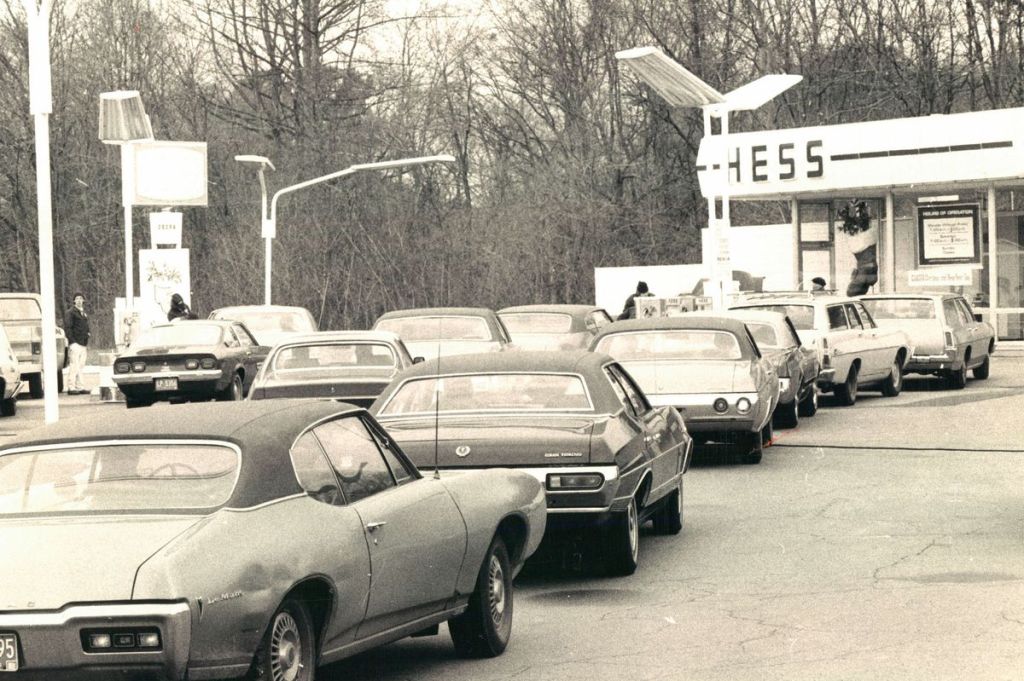
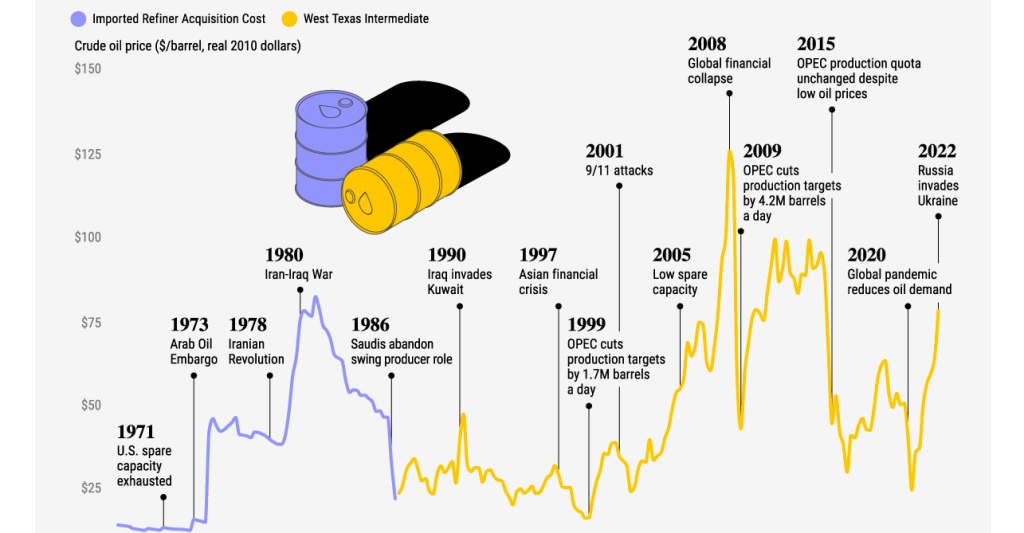
The first oil crisis was a result of the Arab-Israeli war in 1969. Arab nations refused to export crude oil to nations supporting Israel and by October 1973 the price of crude oil had risen from $10 per barrel to almost $50 per barrel. The shortage caused long backups at filling stations and home heating oil shortages combined with drastic price increases.
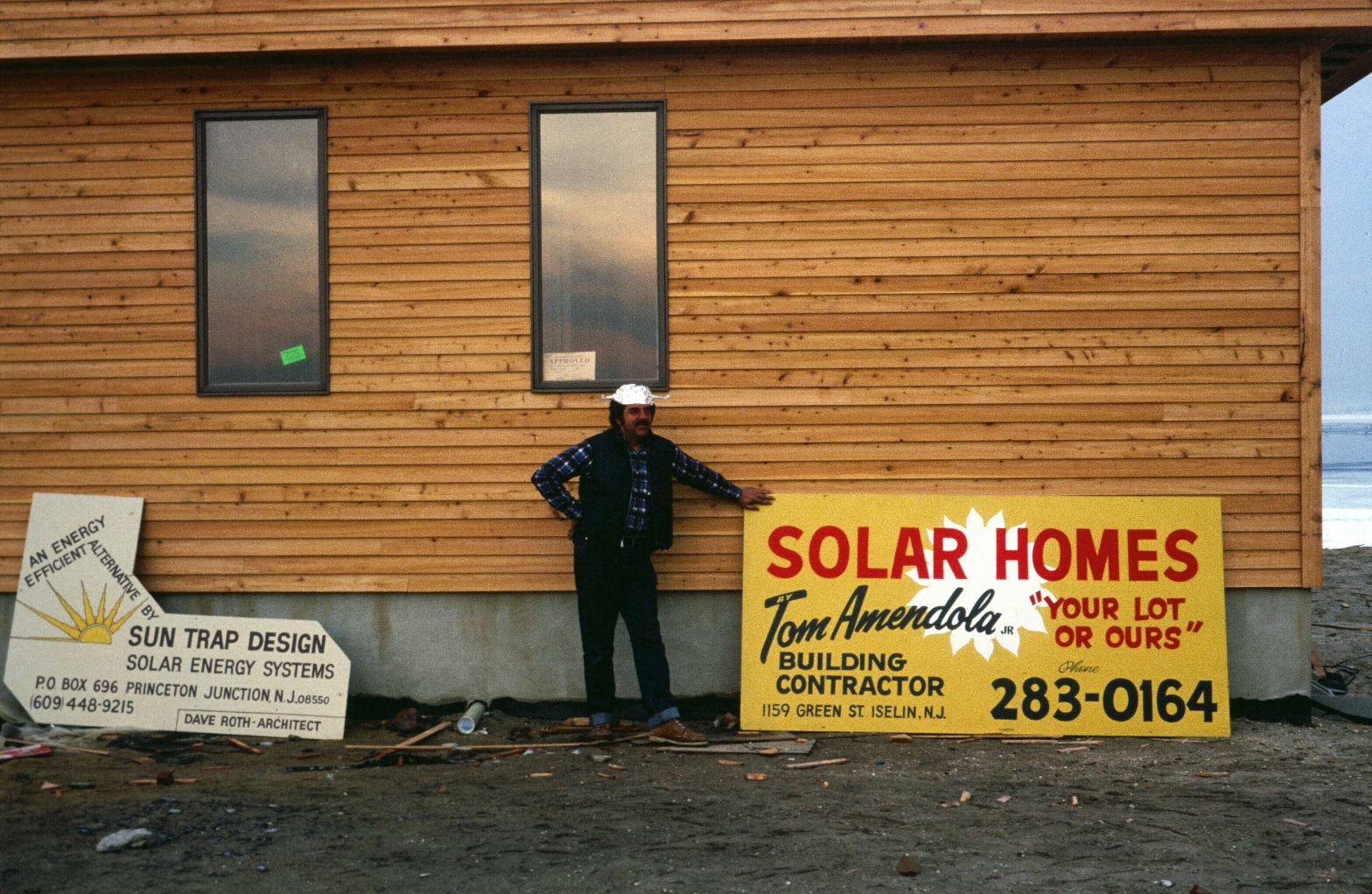
The oil crisis, as it was called, sparked a strong interest in fossil fuel alternatives, especially solar energy. On the surface, solar space heating appeared to be a sensible idea and since I was employed by Lummus in the energy industry, I had firsthand knowledge of the impact of the increased price of fossil fuel energy. And so, I became very interested in solar applications. I began to study the possibilities of capturing solar energy for space heating and for the next several years I studied everything I could find on solar developments. At that point, I had no ambition to start a solar energy business but simply followed solar developments as an interesting idea.

Second Oil Crisis – 1978-79 Carter Administration Iranian Revolution
The so-called second oil crisis took place in late 1978 and early 1979. Another worldwide crude shortage, this time caused by the Iranian revolution and subsequent curtailment of Iranian oil exports. The price of crude oil escalated from about $50 per barrel to almost $100 per barrel and this event once again caused long “lines” at gas filing stations, as did the first oil shock in 1970, and once again it sparked a general panic among the driving public.
I was already familiar with solar energy fundamentals from the first go-around and my assessment was there might be sufficient economic incentives to justify solar space heating and water heating applications. Despite the obvious drawbacks of low energy density (low energy input) and the intermittent nature of solar energy, the economic equation had now changed significantly with crude oil priced at around $100 per barrel. This reignited my part-time study of alternative energy possibilities. I happened to be in touch with my childhood friend, Dennis Connell, and although he had no technical background in energy and engineering he was excited about the solar energy concept and wanted to start a business to do solar installations. I was also convinced the idea had merit and we formed a small company, Sun Trap Design, located in Princeton Junction, NJ, to pursue potential projects.
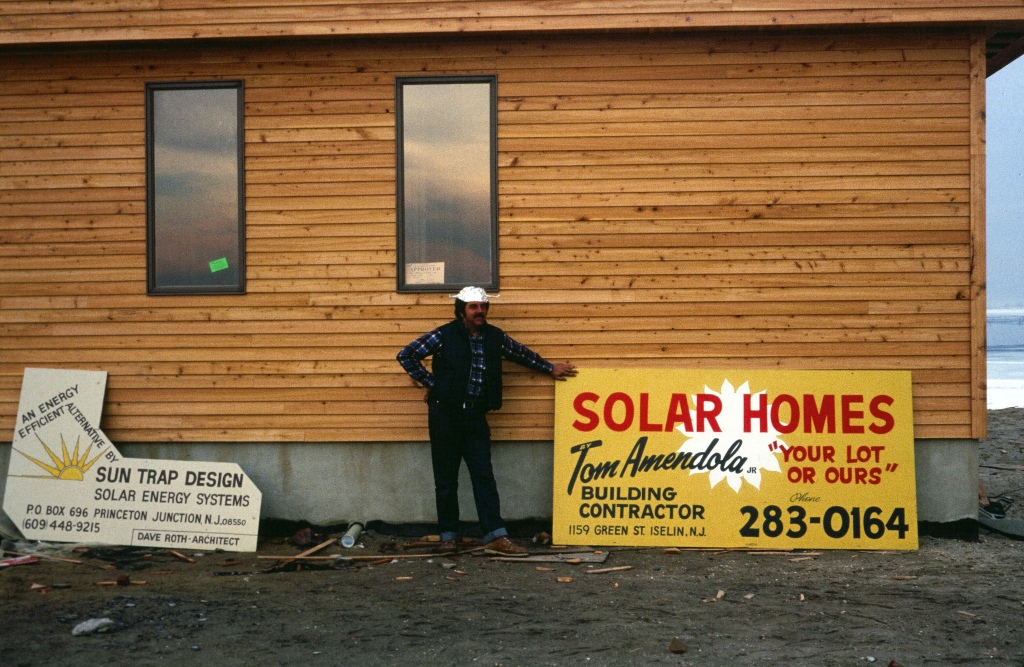
Not long after we started the partnership, Dennis called me and asked if I would meet him at the A&W Root Beer stand in Toms River, New Jersey. He had a prospect for a solar project and would meet with us that afternoon to discuss his ideas. Dennis and I drove to the A&W and met with Tom Amendola, a small businessman building custom homes in the Toms River area. He was enthusiastic about the solar phenomena getting a lot of publicity in the media and thought it would enhance his home construction business. We immediately “hit it off” and decided to partner with Tom to build a high-profile custom-house at the Jersey shore in Toms River, NJ. Tom asked if we had an architect that could design the home. One of my colleagues from Lummus, Ari Minkinen, had a good friend, Dave Roth, that was an architect in New York City and he agreed to introduce me.
I met Dave Roth at his apartment in New York. I pitched our idea and he became very interested in the opportunity to tackle a solar project. All of us were in agreement that we would do the first project on a contingency basis. Tom Amendola agreed to put up the waterfront land and bankroll construction of the house. We formed a partnership with Sun Trap Design, Dave Roth Architectural, and Amendola Construction.
Dave Roth immediately started on the design of the house, I began the design of the solar space and water heating systems and Dennis scouted out suppliers for the solar panels, controllers, and balance of the system. The Amendola solar home project was underway. Tom had previously purchased a waterfront lot on Barnegat Bay at a very low cost since half of the lot was actually underwater. Later the State of New Jersey passed a wetlands law that forbid the sale of such lots but at that time it was completely legal. In fact, it was a fairly common practice to purchase these half-submerged lots, construct bulkheads, backfill sand from dredging and essentially build the lot out from solid land to the bulkhead. Dave Roth drew up conceptual designs for a custom solar house. A local dredging company was hired to put in a bulkhead, dredge a channel on the water-side and dump the dredged sand over behind the bulkhead, thereby manufacturing a full and legal sized lot. Can’t do that anymore but it was common practice back then. Dave and I worked together to design a home that met all the requirements of both passive and active solar principals as well as fulfilling Tom’s vision for the house. As Tom expressed it “When customers come into the place and look around their reaction will be WOW!”
Passive solar features are based on orientation (to the sun) and the design of the structure to utilize south-facing windows, walls, and floors to capture solar heat in the winter and reject solar heat in the summer. In this way, the active solar system, consisting of solar collectors, pumps, blowers, and other mechanical equipment can be made smaller and less expensive. The Amendola house featured a southeast-facing glass wall overlooking the bay, two-story atrium living room, clear-story windows above the glass wall, stepped roof with two levels facing due south and sloped at a forty-degree angle for the solar panels, two by six studs for fully insulated vertical walls, two by twelve rafters for fully insulated ceiling and roof, two by twelve floor joists for a fully insulated floor. In addition. a heavily insulated solar storage space was located below the floor in a four-foot crawl space filled with two-inch diameter river stones.
It was actually a pretty impressive design; modern but not too modern, different but not too different. We all hoped this would be the first of many and wanted to get this one right. A lot of artistic architectural effort and engineering design went into creating that building.
The foundation, sitting as it was on partially manufactured land, was built on a “grade beam” supported by a total of 54 thirty-foot long pilings located around the building’s periphery. The grade beam was a two foot wide by eighteen inch deep reinforced concrete monolith (single pour) of 5000 psi concrete. The first step in building the grade beam, after laying it out on the lot, was to dig a two foot wide by one and a half foot deep trench for the concrete that would form the monolithic grade beam.
A local subcontractor was hired for the excavation and they dug the trench the old-fashioned way; by hand with shovels. There were three men digging, an older guy about 65 years old, and his two sons in their late thirties. I supervised the job. Each man started at a different corner of the layout. The young guys immediately got into the spirit of the job and were digging at a furious, almost frantic pace. The old man, however, seemed to be taking it nice and easy. After about an hour, I noticed that the old man was about twice as far along as the two sons. His trench was also almost perfectly straight and square. The two sons, on the other hand, were considerably behind, and although their trenches were adequate (or in engineers’ parlance, met spec but weren’t pretty). Theirs weren’t nearly as straight and square as the old man’s. Observing the old man work a little longer, I noticed he didn’t move very fast but there was no wasted motion. And unlike the youngsters, he didn’t need to stop to check the level and measure the depth and width from time to time, he just kept digging slow and steady. And yet his line was straight the width was even and the depth was plumb; years of experience were evident in his skill. I reflected on it and thought to myself “now that’s really impressive”. Here’s a job, essentially ditch-digging, most would regard as an unskilled job, but this old man has elevated to an art form.
After the trenches were finished a pile driver was brought in to pound the 54 piles in place. Some went fifteen feet down on the first blow (through the soft built-up areas made of dredge tailings) but then went down solidly from there into compacted earth below. Rebar was placed on saddles and concrete was poured finishing the grade beam making it ready for the concrete block foundation. I had occasion to go back and visit the house nearly forty years later. The cedar siding had been painted over, the solar panels were gone, long since replaced with asphalt shingles, the landscape plantings were full-grown but that house still stood just as solid and square on that grade beam as when it first went up. Do things right the first time and you don’t have to do them over.
As part of the passive solar design, the walls of the building were constructed from two by six studs so that they could accept nearly six inches of insulation rather than the usual four inches. Standard building practice is to lay the subfloor then build the walls on the floor and lift them vertically to fasten them in place. The first wall was nearly fifty feet long, the full length of the house. When the wall was finished eight men tried to lift it to the vertical position. As they say in New Jersey, forgetaboutit. Time to bring in the crane. The lesson learned was building “energy efficient” is higher cost, in both materials and labor. Conventional cost estimating procedures underestimate the actual costs and are largely inapplicable for energy-efficient construction.
In time the project was finished and the solar heating system was started up, its performance was closely monitored to see how well it actually performed relative to design. Surprisingly, the passive features outperformed expectations whereas the active solar system was a disappointment. The passive features increased construction costs but over delivered by substantially reducing the utilities costs for all seasons. On the other hand, claims of high efficiency and superior performance from the suppliers of the active solar components fell far short. Monitoring the energy output and performance of the active solar equipment proved that the manufacturer’s claims didn’t stand up and were highly exaggerated.
When the house was completed and put on the market it didn’t sell. There were a lot of tire kickers but no one willing to invest and take the risk on a solar-heated dwelling, which of course at that time was a radical new concept. Tom and his family moved in and lived in the home themselves for several years. He used it to showcase his building skills. In time he dismantled the solar heating system and installed a heat pump heating and cooling system. He finally sold the house several years later and retired to Florida. Our hope of capitalizing on an increasing demand for solar heated homes wasn’t realized. Without subsidies, the cost was too high and performance was too low and the demand never materialized.
Undaunted, Dennis and I pressed on with Sun Trap Design. Dennis was taking an evening course at the local community college and he heard the school administration was getting interested in the so-called “solar craze” and was considering a demonstration project on campus. President Jimmy Carter recently had two solar panels installed on the White House which garnered a lot of publicity and the solar craze was on full bore. At a chance meeting with the college Dean, Dennis mentioned he was a partner in a local solar company that would be interested in bidding on the project if and when it was implemented. The Dean said they were planning to respond to a DOE grant and if they were to win the award the project would proceed. On that, Dennis pitched that Sun Trap Design could put together the grant application on behalf of the college gratis and if they won the award Sun Trap would design and build the system. The Dean agreed and a contract was signed.
So, we worked out a conceptual design, filled out the application, and sent it to DOE applying for the grant on behalf of the College. A year went by and we hadn’t heard anything. Then one afternoon, I answered my office phone and it was the DOE. I was told Sun Trap Design was awarded the grant for the Mercer County Community College solar project. The project was on and the DOE would sponsor it with a grant for $200,000.
Photovoltaic solar cells were in their infancy then, quite inefficient, and very expensive. So, conventional wisdom was to provide space heating and hot water using flat plate solar panels readily available from several manufacturers. We envisioned the system as an array of solar panels located on the flat roof of a three-story campus building. This building housed the gymnasium, showers, locker rooms, and an indoor Olympic swimming pool. It appeared to be an ideal location for a solar installation.
The building was constructed in the mid -sixties when energy costs were low and the existing heating system was grossly inefficient. The building was electrically heated and air conditioned, as well. To maintain a constant load on the air conditioning compressor, ductwork was fitted with what is known as a terminal reheat system. In this system, cold air from the air conditioning unit was delivered to the interior of the building through a maze of ductwork with an electric heating element at the outlet of each duct. To adjust the temperature, a thermostat was set to the desired temperature and the cold air would be heated with an electrical heating element before it exited the duct. It is hard to envision a more inefficient system. There was a large water storage tank on the roof of the building that was also heated electrically for supplying water for the showers and make-up water for the swimming pool.
It was actually a perfect fit for a solar installation. The flat roof allowed the solar panels to be oriented facing due south at the optimum angle for capturing the maximum amount of solar radiation. The large water tank was located inside a well-insulated mechanical room on the north end of the roof. Water could be pumped from the tank through the solar array where it would be heated by the sun and returned to the tank. The existing tank could be put in service for solar storage, saving considerable cost. New equipment required for the solar system were the solar panels, structural supports for the panels, piping, valves, circulating pump, instruments, and controls.
As it turned out the solar panels were only a minor part of the overall system cost. The highest cost items were the structural supports the panels were mounted on. Not only the supports but the cost of raising them with a crane to the roof and the mounting stanchions that had to penetrate the roof membrane and attach to the structural roof beams beneath. Piping was the next largest cost followed by the pumps and controls. So, without the DOE grant, which covered 50% of the total cost of the system, the installation would have been completely uneconomical. It was only marginally economical with the grant. Nevertheless, the project was approved and went ahead.
Mercer County Community College and the venerable Princeton University
In hindsight. I believe the reason that MCCC desperately wanted the solar project is because they are located just down the road from the prestigious Princeton University. Princeton had publicly announced they were installing a solar demonstration system on their campus. And not to be outdone, MCCC said we’ll see your solar project and raise you a solar project. I don’t think the MCCC administration was really too concerned about the performance of the equipment. It was basically a publicity stunt for the University.
After, the solar installation was operational both MCCC and Princeton offered courses in alternative energy, solar design, and installation. I’m not certain but suspect that they both received local and federal government financial assistance for these programs. Both universities were fully vested in the solar craze.
The Amendola Scale Model and the Solar Exposition
Sun Trap Design had now completed two high-profile solar projects and we were eager to promote our accomplishments to generate further business in the solar design and build field. There was an upcoming solar exposition to be held in New York City which looked like a good venue to advertise our expertise and experience.
Dave Roth built a very impressive scale model of the Amendola solar house he was using to promote his architectural practice. It was an impressive piece of work. Dennis and I were aware of the solar energy exposition in the Coliseum in New York City so the three of us decided to rent display space and set up Dave Roth’s Amendola house model as a centerpiece to promote both Sun Trap Design and Dave Roth Architectural firm. We rented a small booth and set up a table for the model and a rack with our brochures and other promotional material. Dave, Dennis, and I attended the show to meet prospective customers and generally promote our solar design enterprise.
The Hippy Clan from Upstate NY
Sun Trap Design, however, was dwarfed by the large sprawling display set up next to our booth. This space was occupied by a large group of sixties counterculture hippies with an incredible collection of very creative but bizarre solar-inspired stuff. Much of it was actually hard to describe.
One of the interesting items was a large roll of black rubber. It was actually EPDM (ethylene propylene diene monomer M-class rubber) and it was produced with a series of 1/8 inch diameter tubes every six inches apart connected by a flat surface between each tube. A sign over the roll stated it was “SolarRoll TM”. It was a low-cost solar panel that could be rolled out over a surface to capture solar heat. A PVC pipe could be attached at each end to supply cold water to the inlet and capture heated water at the outlet. At first, Dave and I both thought it was a ridiculous concept. How much heat could you capture with this thing?
After the show closed at 6 pm, exhibitors sat around in our respective booths and chilled out for a while before heading out to dinner. Two of the hippies from the SolarRoll group came over and sat down next to me and started to discuss the day’s events. OK, picture these guys, shoulder-length unwashed hair, scraggily unkempt beards, tie-dyed t-shirts, and sandals. Looked like Woodstock revisited.
I commented on their SolarRoll product and they described the product in technical detail speaking about the heat transfer coefficients, flow patterns, and so forth. It was obvious they were very knowledgeable about the technical details. I commented that the product couldn’t be very efficient compared to a flat plate solar collector and they agreed it wasn’t, but said it didn’t have to be. Its intended use was as a swimming pool heater, it was cheap, easy to install and it did the job. This was absolutely correct! These guys weren’t trying to save the planet, they were just trying to heat some swimming pools.
I then asked them how they came up with the idea. The guy I was sitting near said, “Yeah man, well me and my buddy Zack here, we were sittin around the farmhouse one night smoking some really good Mexican weed, and we just like, came up with it Man”. My response, “Wow, cool beaners.” I asked him what farmhouse and he told me the whole tribe he was hanging with were members of a commune in upstate NY that lived off the grid on an old farm. They played music, smoked weed, grew their own vegetables, and just like “came up with stuff”. He then handed me their SolarRoll brochure which included a reprint of a featured article about SolarRoll in, I couldn’t believe it, Fortune Magazine.
Now I was really intrigued. So, I wandered over to their area to check out what else they “came up with smoking really good weed”. The most unusual and outlandish item was a huge sculpture about fifteen feet tall they called Solar Bird, the World‘s first solar sculpture. It was a metal sculpture of a mythical Thunderbird with the wings outstretched and embedded in the wings were, you guessed it, solar panels. The sculpture was huge, extremely heavy, and mounted on a flatbed trailer. I was wondering how they got the thing into the display area and how they were going to get it out.

That question was answered on the third day when the exposition ended. The guy that created this thing pulled into the display area with and old beat up Chevy pickup truck with a fifth wheel hitch in the bed. He backed the truck up to the trailer that Solar Bird was perched on and unloaded what looked like a very large heavy-duty plastic bag. He placed the large bag near the front end of the flatbed trailer just behind the hitch and hooked up a nozzle from the bag to a hose that led to the exhaust pipe of the truck. He started up the truck and the bag inflated with exhaust slowly lifting the end of the trailer so that he could back up a few feet and line up the fifth wheel hitch. He then disconnected the hose, deflating the bag and the trailer slowly dropped down and engaged the hitch in the truck bed. Well, I’ll be damned! These guys are not to be taken lightly.
He put the bag in the bed of the truck and then slowly drove Solar Bird out of the Coliseum. He pulled that thing through the streets of Manhattan and back to the commune in upstate NY with that old Chevy pickup. I often wonder, whatever eventually became of Solar Bird?
On the other hand, we, in our dark blue suits, button-down shirts, red ties, and wingtip shoes were trying to start a reputable solar company to make an impact on the country’s energy crisis. Those guys were just trying to make a buck to buy some “really good weed”. They were actually way ahead of us!
Post Script
When we started Sun Trap Design we approached solar design from the standpoint of a typical engineering problem. That is, how do we design a system with the highest efficiency and lowest cost? That’s all well and good. However, what we ignored was whether or not it could be a complete replacement for fossil fuels. The idea at the time was to reduce the dependence of the western world on petroleum imports from the Middle East. Global warming had not yet gotten traction. What we did by default is learn first-hand about the imitations of solar energy as a heat or power source.
WARNING – The following is a dispassionate discussion of practical limitations to alternative energy without any influence (emphasis added) from feelings or wishful thinking.
There is a finite limit to the amount of energy input. Solar radiation at the earth’s surface is limited to a certain quantity of energy per unit area. On a cloudless sunny day at any given location, at any specific time, this input is fixed. According to the first law of thermodynamics, the amount of energy falling on the surface cannot be created nor destroyed. It can be only converted from one form into another, albeit with a loss in efficiency, but the quantity or amount cannot be increased beyond what is coming in.
The second limitation is the capture and conversion of solar energy involving a loss due to inefficiency. This is a result of the second law of thermodynamics. The energy output is always less than the energy input. The quality of the useful energy output is degraded and for any system, there is a maximum theoretical efficiency that cannot be exceeded under any circumstances.
What we have then is a limited amount coming in and somewhat less going out based on the laws of nature, before we even consider the nighttime hours, the twelve or so hours that no energy is coming in, and the effect of overcast or cloudy days when the amount coming in during the twelve hours of daylight is greatly reduced.
So for any given location, the maximum theoretical energy output that we can capture and convert is reduced considerably from that which is coming in from the source. This is the useful available energy.
If we compare the available solar energy after capture, conversion, and transport to the energy demand, that is the amount required to heat the house, heat water, or produce electrical power to run an air conditioner, we find that a very large area of solar collectors is needed to satisfy the demand. It becomes apparent that the capture of solar energy from radiation from the sun requires an area for collection that for all intents and purposes is totally impractical. Or conversely to meet the demand, solar can only provide a fraction of the demand with a collection device of a practical size. I wish we would have understood this dilemma before we started. But we didn’t. As a result, the observed performance was unfortunately disappointing. We finally realized that we can’t get there from here. At best, we can only get part-way there from here.
Post – Post Scrip (Jill Johnston addition):
I frequently think about this specific time of our lives together. These days, when my dad worked on Sun Trap Design projects was very influential on me for a number of reasons. The first was I was thrilled that he was focusing on renewal energy (i.e., saving the planet) when his full-time job was involved in petroleum engineering, which to me, was the opposite of saving the planet from my naive point of view at the time. The second was, it was a time in his life that he had a lot of positive energy, he was genuinely happy. He loved spending time with Dennis, Dave, Tom Amendola, at the house in Toms River. Mainly because of this time in his life and me being there on the sidelines (and once in a while take a trip down the shore to see progress on the solar house), it made me take on environmental causes with earnest resulting in me attending SUNY – Environmental Science and Forestry university where I received my B.Sc in Environmental and Science Biology. Most who know me, think I received my degree in Biology, but it is a bit more nuanced than that. I chose that degree because I specifically wanted to be a scientist like my dad, but doing good for the environment. Today, while I have been very successful in my career in Clinical Research (bringing new medicines to market, fast..), I do actually feel like a bit of a fraud because I decided early on that if I was going to make a living, a really good living, it was not going to be taking the environmental route. Today, as I reflect, I chose to take a different route in my schooling in spite of my father’s chosen profession, but ultimately, it was here (with the happiness I say in him during this time) that he ultimately taught me the best lesson of all, following your heart and passions with ultimately lead to happiness.
 Long Story Short: A Collection of Stories by Hal Gunardson