
Germany – Process Design Manager
It was 1976 and the oil and gas industry was expanding, especially overseas. The Lummus Company was extremely busy and had numerous international projects underway. One was a major refinery expansion in Germany at the Erdol Refinerie Neustadt. I was chosen as the lead process engineer for this project and was asked to relocate for a year to the Lummus branch office in Wiesbaden, Germany to manage the process design and engineering. This was a significant promotion and would be my first time managing the complete process design of a major refinery.
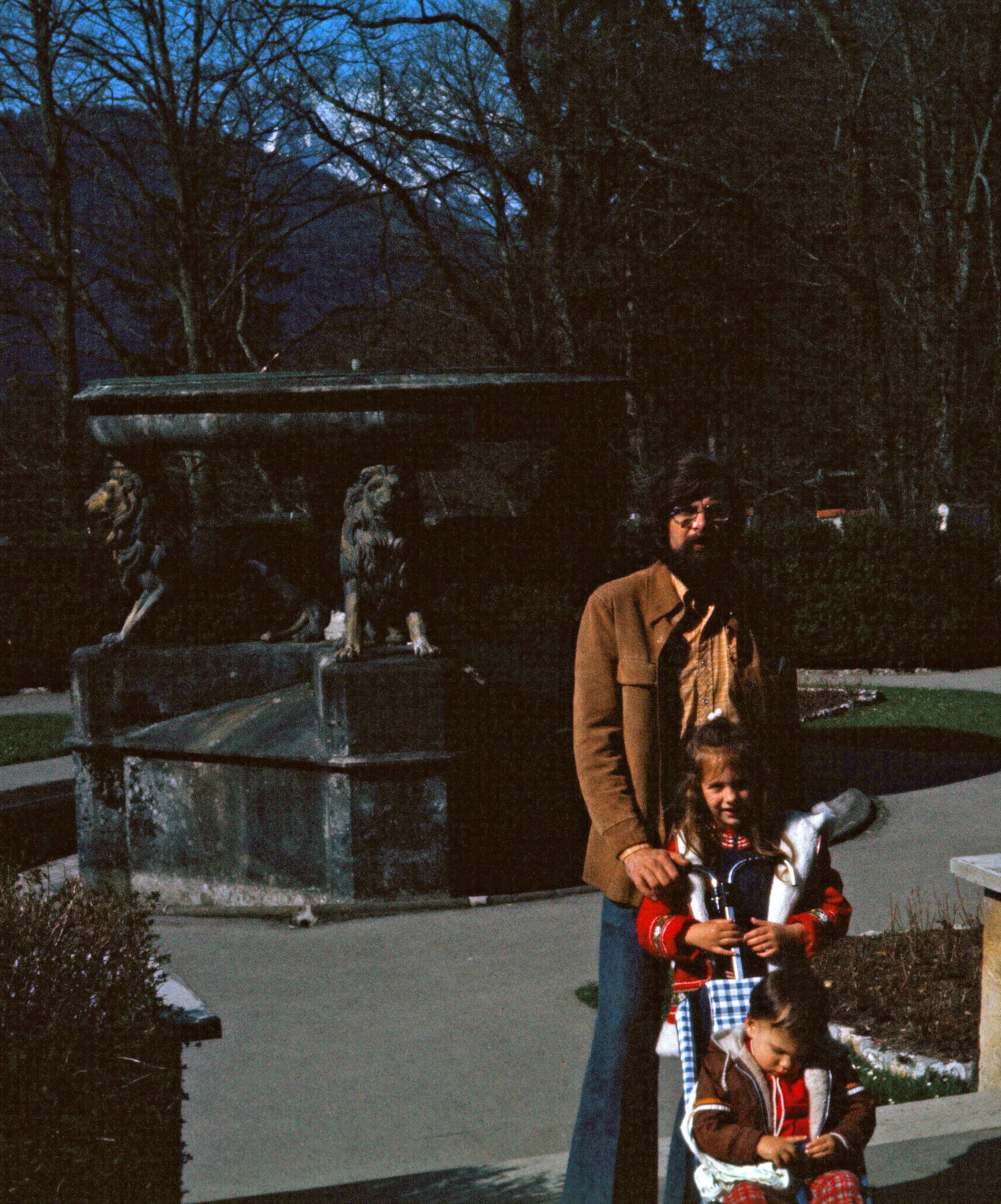
I talked it over with Joann and decided to accept the opportunity and move to Germany for a year. Jill was six years old and Jim was four (actually he was 2) at the time. I thought it would be a great experience for the whole family, especially for the kids. Joann agreed and we decided to go.
There were two other factors I hadn’t discussed with Joann that were important considerations in my decision to take this assignment. First, it would be financially lucrative and since we were in credit card debt it would be a way to extricate ourselves from this unpleasant burden. Second, it would be a way to distance ourselves from the strain of living with the extended family in New Jersey and give Joann and me a chance to function as an independent family for the first time since we were married.
I took an early reconnaissance trip to Germany for a couple of weeks to meet the German team and scout out a suitable place to live. Wiesbaden is a beautiful town in central Germany just west of Frankfurt and across the Rhine river from the city of Mainz. In the mid-1970’s there was a large US military presence in Frankfurt and there were schools on the military bases for children of US ex-pats. I returned to the US excited about this opportunity for a foreign assignment. A few weeks later Joann, I, and the kids packed up and embarked on a United Airlines flight to Wiesbaden, Germany. At that time the economy in Germany was very robust and the value of the local currency, the Deutschmark, was gaining relative to the US dollar almost daily. Since I would be there for at least a year I was able to convince Lummus to transfer me to the German payroll and the currency exchange rate effectively doubled my salary.
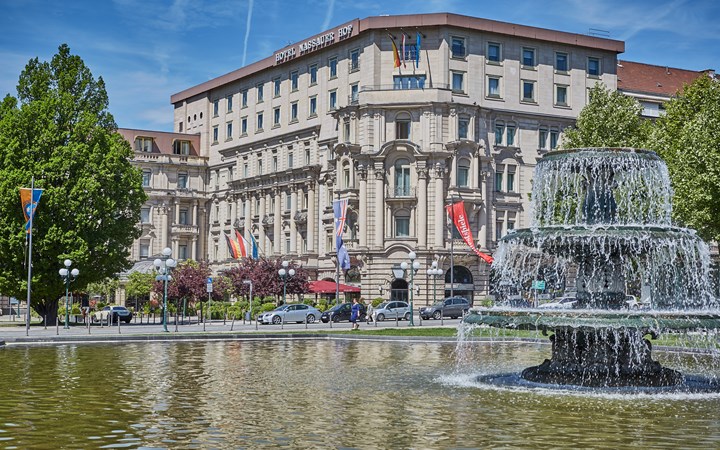
The Nassauerhof Hotel
On our arrival in Wiesbaden, we checked into the Nassauerhof Hotel, a grand old hotel in the center of town within walking distance to my office and adjacent to the Fußgängerzone in Landeshauptstadt, Wiesbaden, known to us as the Fussganger Zone (foot walking zone), which featured a range of unique small shops and restaurants. The Lummus Company covered the expense for us to stay in the hotel for several weeks until we could find a suitable apartment.
With the German economy booming, rental properties were scarce and furnished apartments were hard to find. The Lummus personnel department put us in contact with an agent, Frau Neumann, to provide assistance in finding a suitable apartment. Our requirements were a two-bedroom apartment within our budget within reasonable proximity to my office. Frau Neumann, a portly German lady, who spoke excellent English, was our agent. She eventually found us a furnished two-bedroom apartment in a nice neighborhood within walking distance of my office. It was in the Sonnenberg section of Wiesbaden, just north of downtown.
Unfortunately, the apartment was on the bottom floor of a multistory building, in what was previously the basement of the building. It was acceptable but had only about six feet of headroom between the floor and ceiling so Joann and I had to kind of duck down to move around. Nevertheless, we took it and moved to our new address Pfahler Strasse 46, Wiesbaden, Germany. We set up a crib for Jimmy in the living room and Jill had her own bedroom.
The German Neighborhood
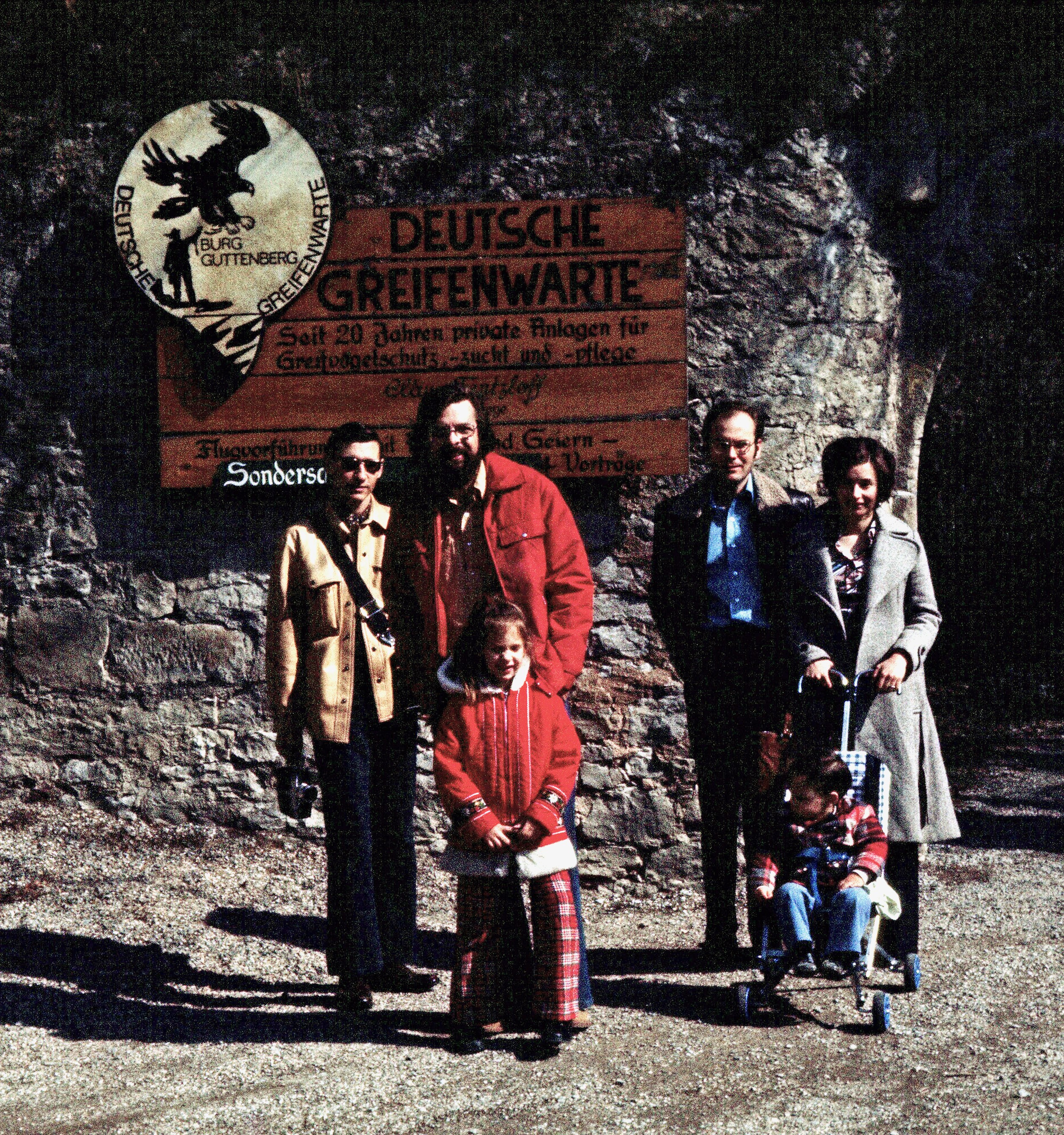
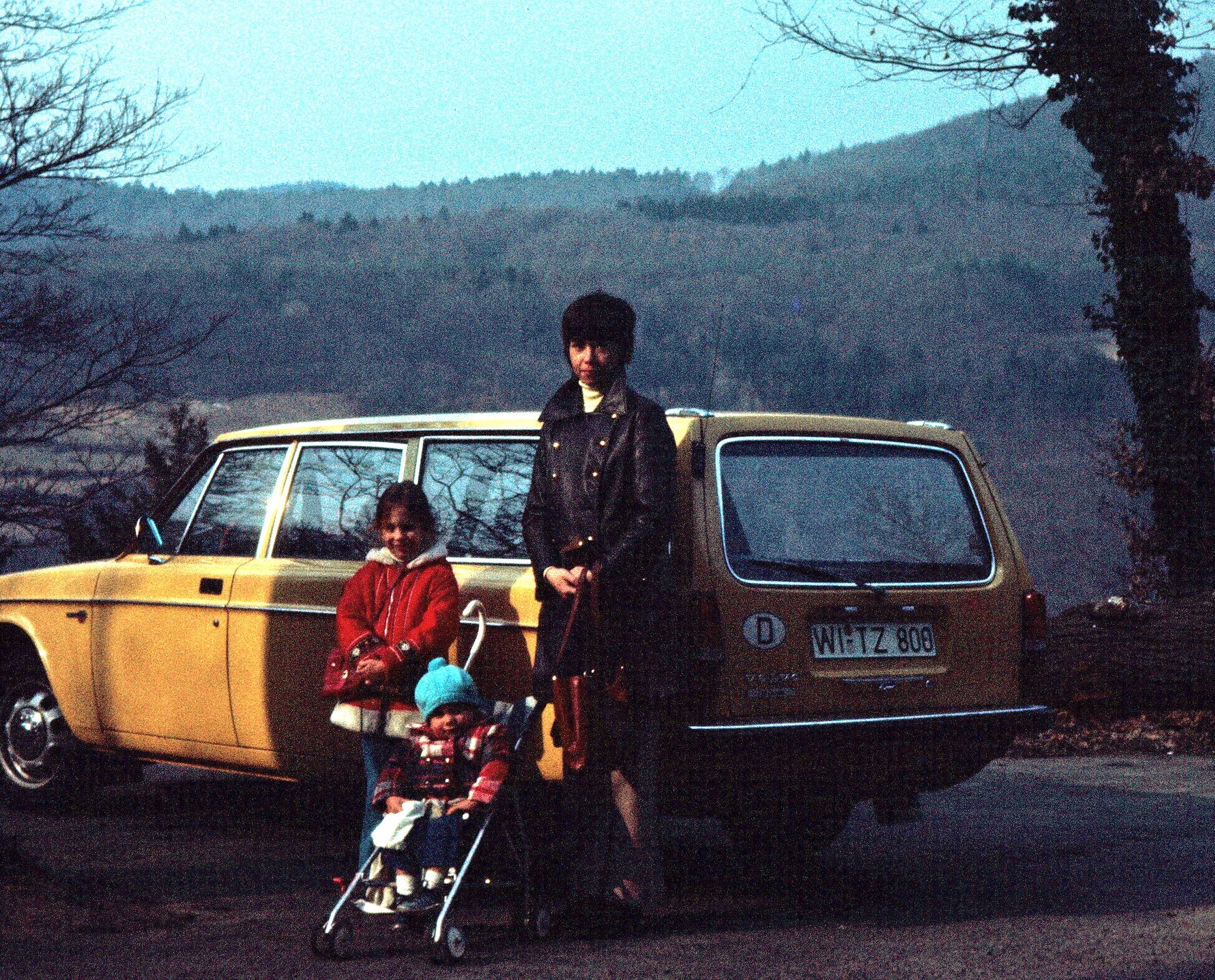
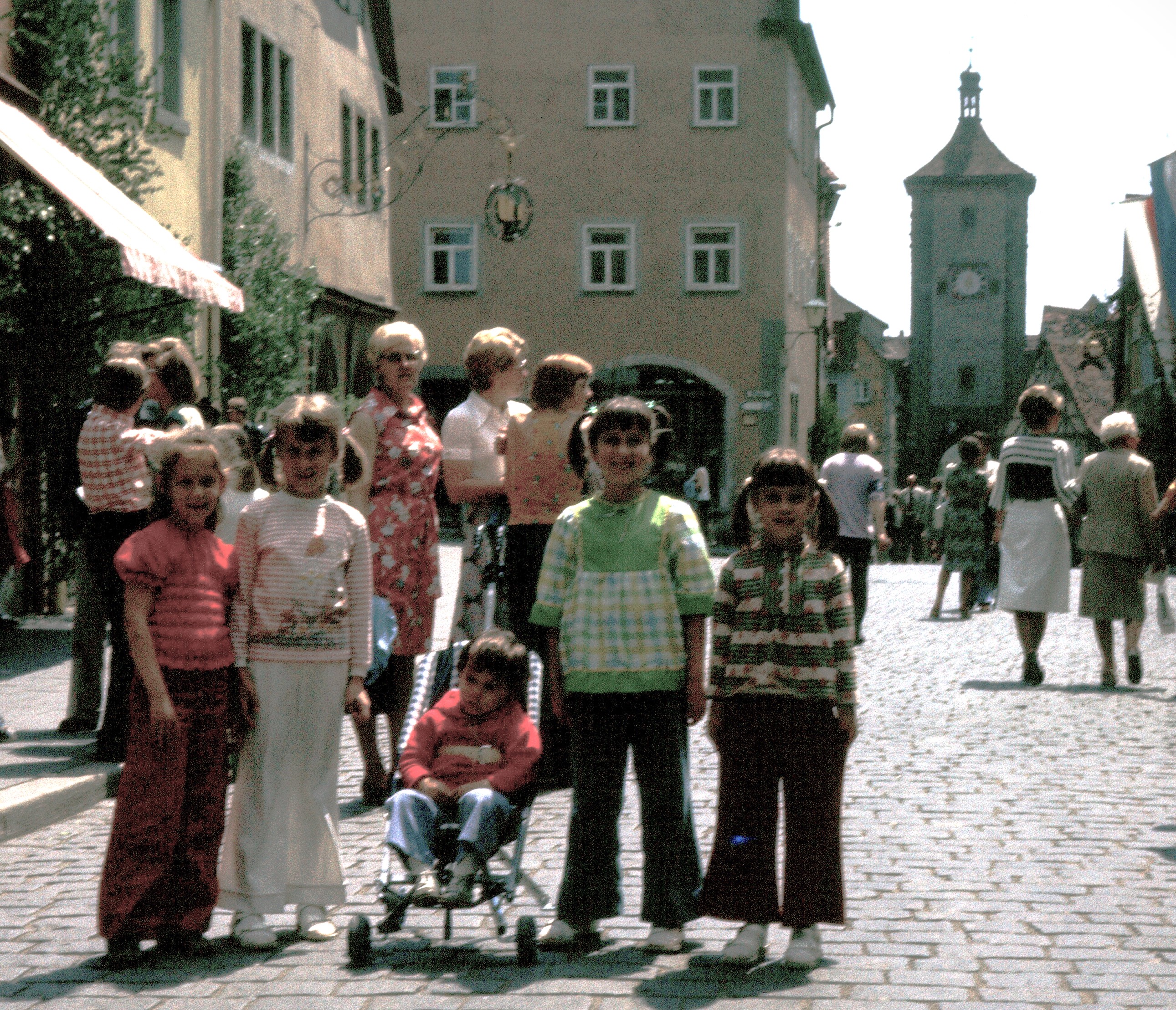
The apartment wasn’t the most luxurious of accommodations but the neighborhood was very nice. Our neighbors were six couples with young children, about Jill’s age. We enrolled Jill in the ex-pat kindergarten class at the Erbenheim US Army Air base just east of the city where she spent weekday mornings. She would play with the German kids in the small yard outside our apartment in the afternoon and on weekends. It was a great arrangement and a terrific learning experience for both Jill and Jimmy. Within a short time, Jill learned to speak German with the kids her age and Jim also learned the language at his vocabulary level. In fact, despite my futile attempts to learn German, when we were shopping on Saturdays and I became frustrated when proprietors would refuse to speak English, Jill would frequently translate for me.
When we returned to the USA Jill was enrolled in the first grade in New Jersey and during the first week of school she came home with a note from her teacher that said she wanted me to attend a parent-teacher conference regarding Jill’s “problem”. The teacher was a young woman herself, probably about 24 years old. She informed me that Jill had a serious speech impediment. I said I didn’t notice a problem, what is it? She replied in a very serious tone, “Jill has a strong tendency to roll her R’s” I couldn’t help but laugh out loud. I told her of course she rolls her R’s, she is speaking with a German accent. I politely informed the teacher that we just returned from a year in Germany where Jill played every afternoon with German kids all of them speaking only German. I told her that I could never roll my R’s despite a year of frustrating attempts. About two weeks later, Jill resumed her normal command of English and rolling R’s quickly became a thing of the past. Jimmy was only in his second year but he also was speaking German with a limited vocabulary. If he was speaking with his sister he spoke English but if he was speaking to the German kids it would be in his nascent German.
Germany – Culture Shock
I was grumbling one day about the countless rules in Germany that I failed to completely understand. A German friend explained it to me this way. He said, ”in Germany, we have a large population in a relatively small geographic area so we necessarily need to have rules and regulations to cover every contingency.” He then added, “However, for oneself, there are always exceptions.” It took some time to get accustomed to these rules and regulations and particularly the exceptions. One of the major differences, actually throughout Western Europe, was the extremely liberal view of public nudity. This was vividly demonstrated one afternoon in our own backyard. Jill was playing with the German kids outside and suddenly the doorbell rang. When I opened the door, there was Jill stark-ass naked with a daisy in her mouth. All the kids were about five or six years old and several of the others were naked as well. What the hell?




The German culture in the workplace was something else. I had worked with Europeans including Germans in the USA but nothing prepared me for the culture shock that was in store for me in the Wiesbaden office.
On my first day in the office, I met up with an old colleague, Konrad Triesel whom I worked with in New Jersey a few years earlier. Since I was in charge of the project (although he thought he should have been offered that job) he undertook to become my newest best friend. This guy was wrapped tighter than a banjo string. When he spoke he stood at attention ramrod straight, the veins in his neck and his forehead popped out as if they were going to burst and he would speak with a staccato cadence. I could picture him in my mind with a switch and a monocle.
He took me into his office, closed the door, and gave me some sage advice, at least in his mind it was sage advice. He said, “We worked together in the states and I know your style, lay back, easy-going Americanishe style. Well, that will not work here JJJermany. You need to understand in JJJermany, everyone walks with za open knife in za pocket”, and “YOU need to become the Prussian general”. He then railed on about how the management (Der Arbieten Furher) had a dossier on him (Triesel) and his every move was being constantly watched. The problem was he was half right. He needed to be watched. He continued to rant telling me, “I know they have a dossier on Triesel, they know Triesel is head of the Btriebsrade (workers union), and then in a confidential tone with lowered voice “they know Triesel doesn’t like the Jews”. And so, that was just the introduction to my experience in the German office.
Another situation involved one of the young female engineers working on my team. She was an East Indian girl, Saunda Chouduri, very smart, very competent, and spoke fluent German, but very shy. Even though she received her degree in Germany and had been there several years she was completely out of her element in that environment. She reported to a guy named Dieter Gluck.
Dieter was about six foot five, had a goatee, a perpetually unhappy expression, and essentially no discernible sense of humor. He had escaped from East Germany a few years prior, it was rumored under machine gun fire, and I guess based on that experience was extremely secretive and taciturn. He always had a completely clean desk with only a calculator and a single sheet of paper on the desk at all times. I once entered his office to ask him about his progress on the design of the distillation tower that he was working on. He glared at me in silence for several minutes and then without breaking his stare slowly reached into his bottom desk drawer, withdrew a sheet of paper, and slid it across the desk. It was the final page of the calculations for the tower with all the pertinent information neatly summarized, height, diameter, number of trays, etc. I slid it back to him across the desk while he continued his unblinking stare, he slowly reached back down, opened the same drawer and placed the sheet back into place, and closed the drawer again without breaking his stare. I got up and left. No words were spoken. Dieter was Saunda’s supervisor. God, I felt sorry for that girl. Later in the project, I rearranged the reporting relationships and Saunda perhaps for the first time since she was in Germany started to open up.
I also had an American ex-pat that came over to Germany to assist on the project, a young guy named Russel Biss. I decided he could work with Dieter because of his previous experience with distillation towers. The first day Russell arrived, I introduced him to Dieter. Dieter sat motionless glaring at Russel as he extended his arm to shake hands. Dieter ignored the gesture and simply stared back at me, without making eye contact with Russell, he stated, “Vell, I usually don’t like zu vork mit za young puppies”. Then after a pregnant pause, he replied “but in zis case perhaps I make an exception, yah”. Not too bad for Dieter. This was nice as he got. Eventually, I made Dieter my second in command (He was the personification of the Prussian General that Conrad Triesel talked about on my first day in the German office). Needless to say, the project was successfully completed within budget and on schedule.
So long, good luck and have a nice day….
 Long Story Short: A Collection of Stories by Hal Gunardson